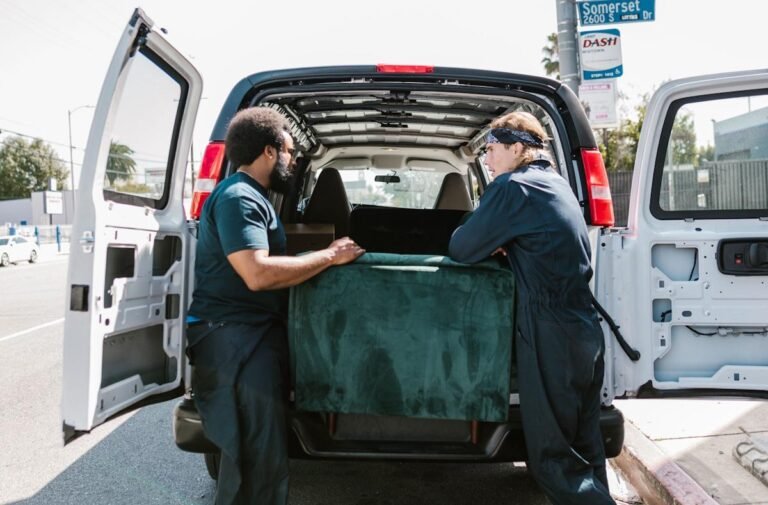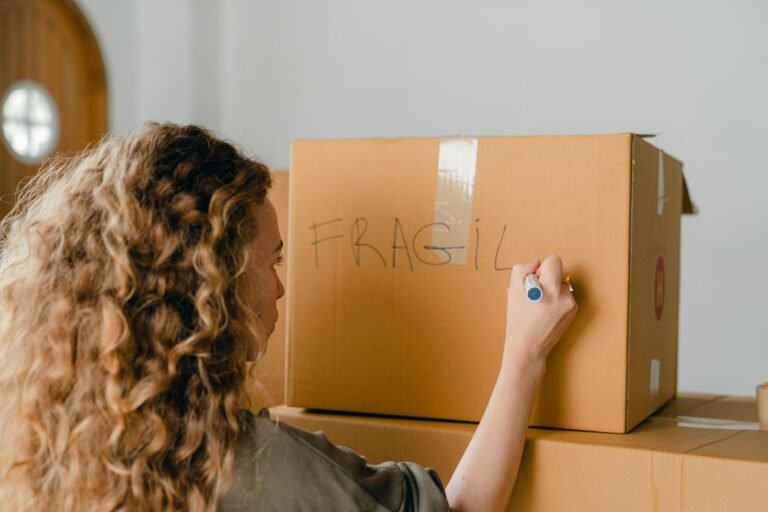
Additionally, this shows how to declutter before moving house.
First, how to declutter before moving house helps reduce boxes, speeds loading, and may shrink the removal van.
Additionally, it prevents carrying unwanted possessions into your new home and avoids repeating decisions after moving day.
Additionally, learn how to declutter before moving house to avoid packing amid half-filled boxes and a looming deadline. This approach helps you move efficiently and reduces stress during the process.
Before you begin, picture your new home
Marie Kondo’s first useful lesson is to imagine how you want to live. Additionally, imagine how you want to live before deciding what to keep.
Think beyond having a tidier home.
Picture your normal day in the new property.
Will you have less storage? Do you want clearer surfaces? Will you finally have a dedicated office, or will your desk need to fit into the living room? Are you moving from a house to a flat?
This gives your decisions a purpose. Instead of asking, “Could I use this one day?”, you can ask, “Does this belong in the life I am moving towards?”
Technically, the KonMari Method recommends tidying by category rather than by room.
Moving, however, involves rooms, deadlines and labeled boxes.
A practical compromise is to work through the house room by room.
Then you can group similar items together before making decisions.
Additionally, prepare five clearly marked areas.
- Keep
- Sell
- Donate
- Recycle
- Dispose
Avoid creating an unlimited “decide later” pile. Additionally, if necessary, allow yourself one small undecided box and review it at the end.
Bathroom: begin with an easy win
Additionally, the bathroom is a good place to start because many decisions are factual rather than emotional.
Check expiry dates and dispose of empty containers, dried-out products and toiletries that irritated your skin or that you never enjoyed using. Combine duplicates where it is safe and hygienic to do so, but do not spend time transferring tiny amounts between bottles simply to avoid throwing anything away.
Review:
- Expired cosmetics and toiletries
- Old towels and bath mats
- Duplicate hair tools
- Almost-empty cleaning products
- Hotel samples you never use
- Medicines and first-aid supplies
Return unwanted or expired medicines to a pharmacy for safe disposal. Additionally, NHS guidance advises against placing them in household waste or flushing them away. Read the NHS medicines disposal guidance.
Pack a clearly labeled bathroom essentials bag with items you will need during the final evening in your old home.
Additionally, it should cover the first morning in your new home.
Moreover, this helps you have what you need as you settle in.
Kitchen: remove expired food and duplicate equipment
Kitchens often contain more possessions than any other room, so allow more time than you think you will need.
Begin with food. Additionally, check cupboards, the fridge and freezer, and plan meals around ingredients that will not travel well. Keep only food that is in date, properly sealed and worth transporting. Furthermore, ask your local food bank what unopened products it accepts rather than assuming everything can be donated.
Next, group similar kitchen items together. Seeing every mug, saucepan or food container in one place makes duplication much harder to ignore.
Look for:
- Containers without matching lids
- Chipped crockery
- Duplicate utensils
- Appliances you have not used
- Excess mugs and glasses
- Old tea towels
- Out-of-date herbs and spices
- specialized gadgets that solve no real problem
You may not have used the bread maker, juicer, or ice-cream machine in your current kitchen.
However, moving it is unlikely to transform your habits.
Keep the equipment that supports how you genuinely cook, not how you imagine you ought to cook.
Bedroom and wardrobe: choose clothes for your current life
Clothes are central to the KonMari process. Ideally, gather all your clothing together. Additionally, include pieces stored in another bedroom, the loft, or seasonal storage, so you can see the entire category.
Handle each item and consider three questions:
- Does it fit comfortably now?
- Do I wear it or have a specific occasion for it?
- Do I feel good when I put it on?
An item does not have to be exciting to deserve a place in your wardrobe. Additionally, a practical winter coat may not “spark joy” in a dramatic sense, but it serves a clear purpose. The useful interpretation is to keep clothes that you value, use or genuinely enjoy.
Release clothes associated with a fantasy version of yourself: the painful shoes you never wear, clothes several sizes away from your current body, or outfits bought for a lifestyle you do not lead.
Move next to bedding, pillows and towels. Keep enough for your household and occasional guests, but question heavily worn, uncomfortable or mismatched pieces.
Pack clothing by category and season. Clearly label boxes such as “winter knitwear” or “work clothes” instead of writing only “bedroom”.
Living room: measure furniture before keeping it
Before deciding to move every piece of furniture, measure the main rooms in your new home. A sofa may be in excellent condition and still be the wrong size for the next property.
Review sofas, armchairs, tables, shelving and media units based on:
- Their condition
- Their measurements
- Access through the new doors and staircases
- The available floor space
- The cost of moving them compared with replacing them
Then gather books, decorative objects, electronics, cables and media into separate categories.
Do not keep unread books solely because owning them represents the person you hoped to become. Keep books you love, consult or realistically intend to read. Marie Kondo’s approach treats guilt and obligation as poor reasons to retain a book.
Test electronics before packing them. Additionally, recycle broken equipment responsibly, remove batteries where required and label cables that belong to devices you are keeping. Discard mystery chargers only after checking that they do not belong to something important.
Home office: be strict but careful with paperwork
Paper clutter looks harmless but quickly becomes heavy when packed into boxes.
Gather documents from desks, drawers, bags and filing cabinets. Sort them into:
- Action required
- Regularly used
- Legally or financially important
- Safe to destroy
Keep contracts, certificates, tax records, insurance documents and other important paperwork for the appropriate period. If you are unsure whether a document has legal or financial value, check before destroying it.
Shred papers containing personal or financial information rather than placing them directly in recycling. Scan documents where a digital copy is sufficient, then organize the files immediately and create a secure backup.
Discard obsolete manuals, expired warranties, old delivery notes and piles of printed information that can easily be found online.
Children’s rooms and spare rooms
Involve children in decisions about their own belongings where appropriate. Quietly throwing away their possessions may create anxiety about the move and make them more resistant to decluttering.
Offer manageable choices: which toys should come to the new room, which could make another child happy and which are broken or incomplete?
For spare rooms, focus on the room’s future purpose. They often become storage areas for postponed decisions, unused gifts and furniture that does not fit elsewhere.
If an object has lived in the spare room untouched for several years, ask what specific event would make you use it. “Just in case” is not a plan.
Loft, garage and garden: group similar items first
Storage areas can be overwhelming because unrelated items accumulate together. Do not assess the entire garage as one mass. Separate it into categories such as tools, gardening equipment, sports items, seasonal decorations, paint and luggage.
Keep the best version of duplicate tools and discard broken objects you are never realistically going to repair. Check whether garden furniture and outdoor equipment will fit the new property, particularly if you are losing a garage, shed or garden.
Paint, chemicals, batteries and electrical items may require specialist disposal. Check the rules of your local council or Household Waste Recycling center rather than placing them in general rubbish.
Leave sentimental items until last
Photographs, inherited objects, letters and gifts are usually the most difficult category. By leaving them until the end, you will have practiced making hundreds of easier decisions first.
Do not keep every gift out of guilt. The person who gave it to you wanted to offer pleasure, not permanent storage responsibility.
If the memory matters more than the physical object, consider photographing it before letting it go. Keep representative items rather than an entire collection and give meaningful possessions a defined place in the new home.
A useful KonMari practice is to acknowledge what an item gave you before releasing it. It may feel slightly unusual, but gratitude can make it easier to part with objects that were once valuable but no longer belong in your life.
Sell, donate and dispose of items before moving day
Additionally, set deadlines for every outgoing category.
List valuable items for sale early. If they have not sold by your deadline, reduce the price, donate them or arrange responsible removal. Do not allow unsold items to return silently to the “keep” pile.
Only donate belongings that are clean, safe and usable. Charity shops still need to pay to dispose of unsuitable donations.
For furniture, appliances and household waste, use your council’s collection service or an authorized waste carrier. UK householders have a duty to take reasonable measures to ensure their waste is transferred to an authorized person.
Pack only what has earned a place in your new home
Once decluttering is complete, packing becomes much simpler. Label boxes by destination room and contents, keep heavy items in smaller boxes and prepare one moving-day essentials box.
Update your inventory as you pack. The final number of boxes and pieces of furniture will help your removals company recommend the correct vehicle and team.
If you need support with the move or the removal of unwanted items, Changing Keys can help you choose the appropriate service for your property and belongings.
Decluttering before moving house is not about creating a perfectly minimalist life.
Additionally, it is about deciding what deserves the time, space and cost involved in taking it with you.
That is how to declutter before moving house.
Everything that reaches your new front door should have a reason for being there.